Stay ahead of the curve with technical articles, design tips, and industry analysis from the leaders in precision linear motion.
Loading...
Engineering Insights & Motion Design Resources
Welcome to the Helix Linear Technologies Blog, your source for engineering insights, motion system design guidance, and industry trends in precision linear motion. Our blog is dedicated to helping mechanical engineers, product designers, automation professionals, and technical leaders stay informed, inspired, and empowered with practical knowledge you can apply to real-world projects.
Here, you’ll find:
Engineering tutorials and how-tos that break down complex topics such as lead screw selection, ball screw performance, actuator integration, and motion control best practices.
Application case studies that showcase real examples of precision motion systems in industries like manufacturing automation, robotics, medical devices, and semiconductor equipment.
Technical deep dives that explain design principles, calculate performance criteria, and explore emerging technologies shaping the future of motion components.
Industry perspectives and trends that highlight innovation, standards developments, and strategic insights for advanced engineering teams.
Whether you’re refining a current design, planning a new machine concept, or keeping current with linear motion technology, the Helix Linear blog is designed to support your engineering journey. Every post is written with clarity, backed by technical expertise, and aligned with practical engineering needs to help you make better specification, design, and integration decisions.
Explore our latest content, bookmark your favorite posts, and leverage these resources to accelerate development cycles, improve mechanical performance, and stay ahead in motion system design.
Helix Linear Technologies is committed to providing valuable educational content that empowers engineers to build more precise, efficient, and innovative systems. Dive into our blog and start learning today.
In missile fin actuation systems, ball screws are used to translate rotary motion into linear motion. The ball screw consists of a screw shaft that rotates and a nut that moves along the shaft. The nu
A twin lead screw, also known as a double lead screw, is a threaded rod used in various machinery applications to convert rotary motion into linear motion. It is essentially one screw that has a right
Christopher Nook
Read More
Issues You May Run Into When Designing Linear Motion Systems
As the saying goes, "The devil is in the details." As simple as your linear motion application may seem, focusing on areas that may cause unexpected problems is highly beneficial icial. Here are a few
Dave Arguin
Read More
Four Important Things You Should Know About Buying a Lead Screw
Lead screws are an excellent linear motion product that converts rotary motion to linear motion very economically and offered only moderate accuracy and repeatability until recently. Today's top manuf
Christopher Nook
Read More
Jumping Robots - Robot Design and Experimentation: Galago
In the course "Robot Design and Experimentation," Ph.D. student in mechanical engineering Joseph Norby explains how his team created a galago-inspired jumping robot.
The College of Engineering
Christopher Nook
Read More
Lead Screw Automation Flexibility Key to Medical Device Manufacturing
The only constant is change, especially for medical device manufacturers, who face ongoing pressures to introduce new products or highly modified versions of existing devices faster than any other in
Christopher Nook
Read More
Get Moving with a Precision Linear Actuator
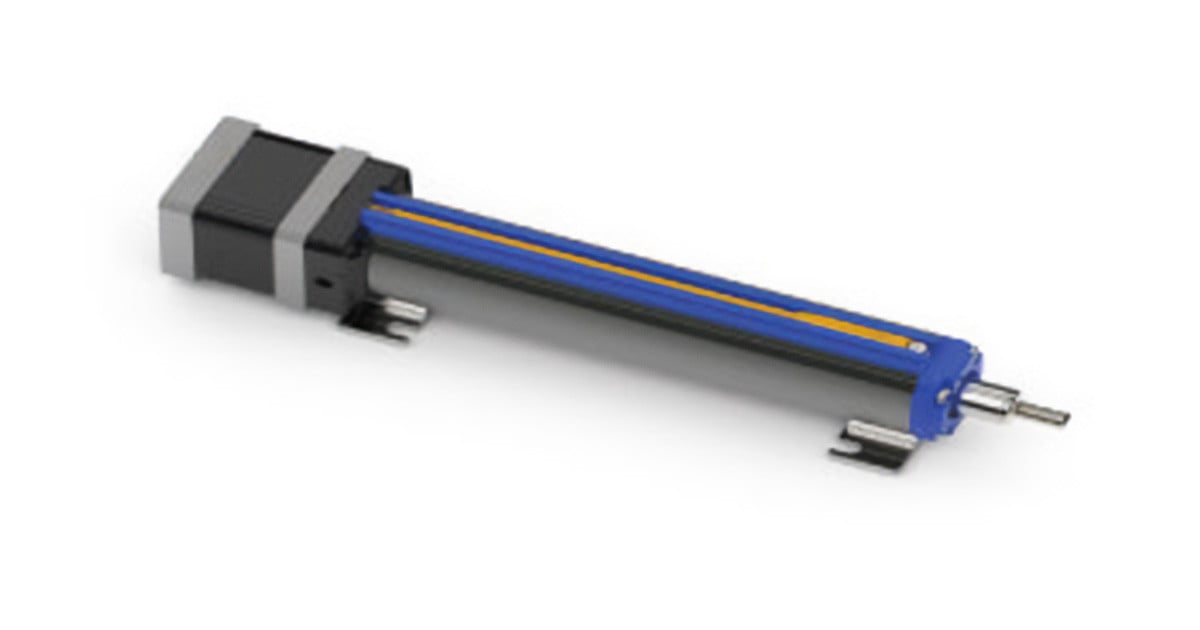
Stepper motor-driven screw linear actuators have been used for a while in a variety of applications. Integrated motor screw units used only to be available in high volume runs or were too costly to
Christopher Nook
Read More
Understanding The options for Lead Screw End-Machining
Although lead screw end machining is not required for every application, the vast majority of applications do involve some modification to one or both of the lead screw's ends. Here, we discuss some
Christopher Nook
Read More
Would it be Better to Increase RPM or the Lead of Your Lead Screw?
When it comes to lead screw performance, it's all about axial load and rotational speed (RPM). As you likely know, the relationship between these two factors is known as "pressure velocity," or the PV
Christopher Nook
Read More
Does Your Lead Screw Need End Machining?
Linear motion applications utilizing a ball screw or a lead screw require high tolerance screw end machining matched with precision Ezze-Mount bearing mounts. Helix Linear Technologies has designed a
Christopher Nook
Read More
The Advantages and Four Most Common Uses of Electric Linear Actuators
Electric linear actuators convert rotary motion into linear motion by rotating a lead screw, ball screw or roller screw. Although several different forms of energy such as electrical, pneumatic, hyd
Christopher Nook
Read More
The Acme Screw Backlash Survival Guide
The question constantly being asked is, what's so essential about perfecting backlash design for acme screws? This acme screw backlash survival guide will answer that question and give you the informa