Stay ahead of the curve with technical articles, design tips, and industry analysis from the leaders in precision linear motion.
Loading...
Engineering Insights & Motion Design Resources
Welcome to the Helix Linear Technologies Blog, your source for engineering insights, motion system design guidance, and industry trends in precision linear motion. Our blog is dedicated to helping mechanical engineers, product designers, automation professionals, and technical leaders stay informed, inspired, and empowered with practical knowledge you can apply to real-world projects.
Here, you’ll find:
Engineering tutorials and how-tos that break down complex topics such as lead screw selection, ball screw performance, actuator integration, and motion control best practices.
Application case studies that showcase real examples of precision motion systems in industries like manufacturing automation, robotics, medical devices, and semiconductor equipment.
Technical deep dives that explain design principles, calculate performance criteria, and explore emerging technologies shaping the future of motion components.
Industry perspectives and trends that highlight innovation, standards developments, and strategic insights for advanced engineering teams.
Whether you’re refining a current design, planning a new machine concept, or keeping current with linear motion technology, the Helix Linear blog is designed to support your engineering journey. Every post is written with clarity, backed by technical expertise, and aligned with practical engineering needs to help you make better specification, design, and integration decisions.
Explore our latest content, bookmark your favorite posts, and leverage these resources to accelerate development cycles, improve mechanical performance, and stay ahead in motion system design.
Helix Linear Technologies is committed to providing valuable educational content that empowers engineers to build more precise, efficient, and innovative systems. Dive into our blog and start learning today.
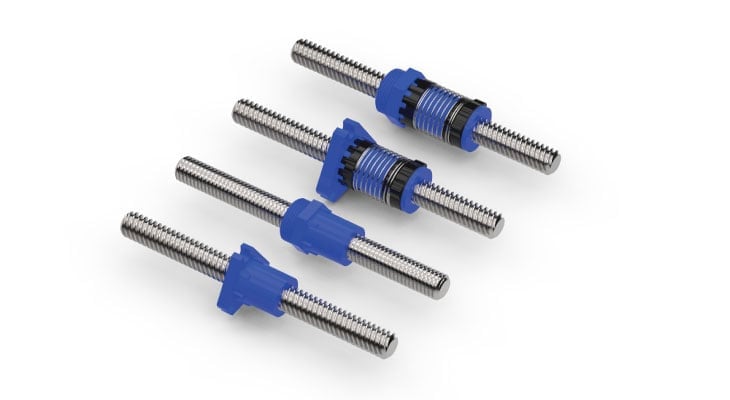
Why Custom Lead Screw Nuts Might Be the Answer to Your Problems!
Many factors dictate the performance of a lead screw, including how it is mounted, as we covered in our last article. However, the most crucial factor is pairing the lead screw with the lead screw nut
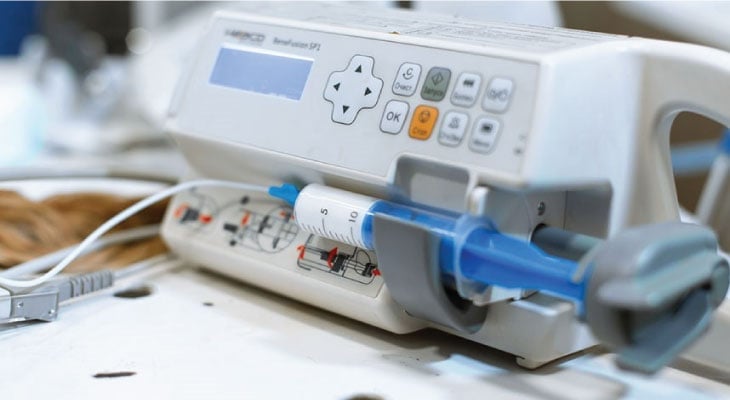
Precision Lead Screws for Liquid Dispensing and Fluid Applications
Clinical medical automation and laboratory automation go hand-in-hand with the linear motion industry. In the current pandemic landscape, precision lead screw and nut assemblies combined with linear a
Christopher Nook
Read More
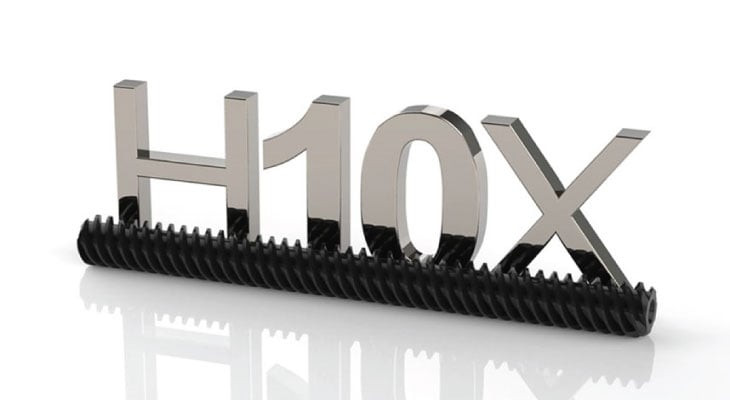
H10X PTFE ™ Coating for Lead Screws
Helix PTFE H10X Lead Screw Coating is a fluoropolymer-based coating combined with specially formulated resins to provide a tough, durable film for dry lubrication. OUr testing has proven that using th
Christopher Nook
Read More
Why You Should Consider a Stainless Steel Acme Screw for Your Project!
Acme Screw assemblies are the preferred choice of many for linear motion applications, partially because they're very flexible, coming in "many flavors," so to speak. One example of this is how many m
Christopher Nook
Read More
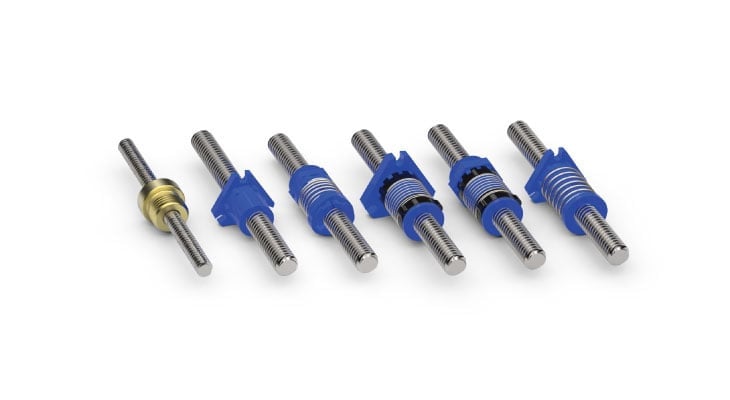
The Best Anti-Backlash Nuts for Linear Motion Systems
There are many styles of anti-backlash lead screw nuts. Selecting the right nut style for your project depends on various factors, including; payload, accuracy, repeatability requirements, budget, s
Christopher Nook
Read More
Lead Screw Efficiency - New Opportunities and Innovation
Today, high precision lead screw and acme screws offer the latest technology for motion control with many opportunities, such as;
Miniaturization and precision
More widely used in automated systems
Christopher Nook
Read More
Lead Screw Column Strength Explained
It goes without saying that there are a lot of factors that go into selecting the right lead screw for your linear motion application. In a previous post, we told you about the importance of critical
Christopher Nook
Read More
The Best Helix Standard Mounting Options for Acme Screws
Various factors need to be considered to ensure that Acme lead screws serve a particular application correctly. There are four primary things to consider regarding lead screw selection: load, speed, l
Christopher Nook
Read More
Lead Screws vs. Ball Screws: Which is Best?
Reviewing the characteristics of lead screws vs. ball screws can help you select the right screw-driven system for your linear motion application.
Both lead screws and ball screws convert rotary moti
Dave Arguin
Read More
Precisely Why Your Lead Screw Coating Matters in Your Applications
Coatings are made up of resin, additives, and a liquefying agent that’s either “water-based” or “solvent-based.” Water-based coatings and solvent-based coatings have distinct purposes that depend on y
Christopher Nook
Read More
How To Know Which Lead Screw Pitch and Lead is Best
What Is Lead Screw Pitch?
The pitch of a lead screw is simply the distance (spacing) between adjacent threads. Many standard thread designations express this as TPI or Threads Per Inch. Threads per in
Dave Arguin
Read More
Aluminum Lead Screws Efficient for Lightweight & Non-Magnetic Projects
Aluminum Lead Screws for Lightweight and Non-Magnetic Applications
For lightweight or non-magnetic applications in the medical, aerospace, and transportation industry, aluminum lead screws are the i